|
List of publications
Tamás Biró
Published software and conference talks since 2006 appear on separate pages.
See also a selected list of references to my publications, and
my entries in various scientific databases.
Books (incl. thesis and edited book(s)):
|
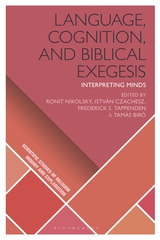
Ronit Nikolsky, István Czachesz, Frederick S. Tappenden, Tamás Biró (eds.),
Language, Cognition, and Biblical Exegesis: Interpreting Minds,
Bloomsbury: London, Oxford, etc., 2019. ISBN: 9781350078123. 256 pp.
Publisher’s site.
See also Fred’s page.
|
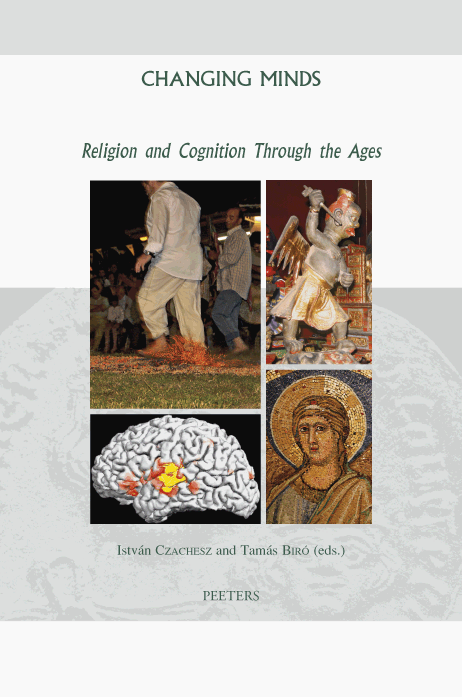 |
István Czachesz and Tamás Biró (eds).
Changing Minds. Religion and Cognition Through the Ages.
Groningen Studies in Cultural Change, 42.
Peeters: Leuven, 2011. ISBN: 978-90-429-2553-3. Pages: XVIII+241. Price: 48 euro.
Book details on the publisher’s website.
Further details:
book description, table of contents, etc.
|
 |
Finding the Right Words: Implementing Optimality Theory with Simulated
Annealing.
Phd-thesis. GroDiL 62. ISBN 90-367-2876-2 (printed version),
90-367-2877-0 (electronic version).
ROA-896.
Submitted in 2006, defended on December 7, 2006 in Groningen.
Download my dissertation (pdf, approx. 2 Mbyte), the
"stellingen"
(pdf, 21 kbyte), and summaries in
English,
Dutch and
Hungarian.
Electronic version of the dissertation on the RuG website (downloadable chapter-by-chapter), and in the
catalogue of the RUG University Library.
More on it, including details
of the Anéla/AVT
dissertation prize it was awarded. |
Recent articles:
2022
Who Circumcised Abraham? A Cognitive Network Model for the Interpretations of Gen 17.
Annali di Storia dell’ Esegesi 39.1, pp. 121–143.
2021
The Jewish Mind: A cognitive science of religion approach to and in Judaism.
Vizi, E. Szilveszter and Sára Réka Kabai and Gabriella Kenéz and Flóra Moravcsik-Nagy and Alexandra Hortenzia Nagy (eds.),
Hit, tudomány és társadalom = Faith, Science and Community, Szent István Társulat: Budapest, 2021, pp. 279–288.
Download.
2019
OT grammars don’t count, but make errors: The consequences of strict domination for simulated annealing.
B. Gyuris, K. Mády, G. Recski: K + K = 120: Papers dedicated to László Kálmán
and András Kornai on the occasion of
their 60th birthdays. Revised and extended edition. MTA Research Institute for Linguistics, Budapest, 2019.
Link.
Liturgical Linguistics: Towards the Syntax of Communicating with the Super-Human Agent in Judaism.
In Nikolsky et al., Language, Cognition, and Biblical Exegesis: Interpreting Minds, Bloomsbury, 2019,
pp. 128–148.
2018
A bibliai héber határozói accusativus és az -a directivus:
Néhány gondolat nyelvtörténeti hipotézisekről
és narratívákról.
[Biblical Hebrew adverbial accusative and the directive -a: Some thoughts on hypotheses and
narratives in historical linguistics].
In Dávid, Nóra and Fodor, György and Őze, Sándor (eds.),
Tíz évhét: Tanulmányok Fröhlich Ida
70. születésnapja alkalmából,
Szent István Társulat: Budapest, 2018, pp. 19–33.
Download. A neológ és a református szakrális tér átalakulása
a 19. században: Egy strukturális-összehasonlító
vallástörténeti ujjgyakorlat.
[The transformation of the neolog Jewish and the Calvinist sacred spaces in the 19th century:
a structural-comparative approach]
In: Oláh János és Zima András (eds.),
Schöner Alfréd hetven éves / Essays in Honor of Alfred Schöner.
Gabbiano Print Nyomda és Kiadó: Budapest, 2018, pp. 67–83.
Download preprint (penultimate
proof) or published version (scanned).
Related to: (2017) Szerepek és szerepjátékok.
Szombat online, December 7, 2017.
Download.
Manuscript and
local copy
of the online article.
2017
OT grammars don’t count, but make errors: The consequences of strict domination for simulated annealing.
Beáta Gyuris, Katalin Mády, and Gábor Recski (eds.),
K + K = 120. Papers dedicated to László Kálmán and András Kornai on the occasion of their 60th birthdays.
MTA Nyelvtudományi Intézet (Research Institute for Linguistics, Hungarian Academy of Sciences), 2017.
ISBN 978-963-9074-73-6. URL: http://www.nytud.hu/kk120.
Download paper.
Workshop slides.
Optimalitáselmélet és gyorsbeszéd:
Egy nyelvtanmodelltől a beszéd modellezéséig, sőt a kísérletekig.
[Optimality Theory and fast speech: From a grammar model to modelling speech to experiments.]
Általános Nyelvészeti Tanulmányok XXIX. Kísérletes nyelvészet.
(István Kenesei, ed.-in-chief, Zoltán Bánréti, ed.)
Akadémiai Kiadó: Budapest, 2017, pp. 127–153.
(Publisher’s site.)
Uncovering structure hand in hand: Joint Robust Interpretive Parsing in Optimality Theory.
Acta Linguistica Academica 64.2 (2017): pp. 191–212. DOI: 10.1556/2062.2017.64.2.2.
Publisher’s page.
Download.
Also related below: (2013) Towards a Robuster Interpretive Parsing: Learning from overt forms in Optimality Theory.
Also related below: (2012) Hogyan tanuljunk kevés információból is? A RIP-algoritmus továbbfejlesztett változatai.
2016
(Not) only the circumcised may circumcise: theological correctness and and intuitive religiosity in Judaism (abstract).
In: Bochinger, Christoph and Rüpke, Jörg (eds.), Dynamics of Religion: Past and Present
De Gruyter: 2016, pp. 311–505, p. 419.
Link
and local link.
Egy befejezetlen beszélgetés tanulságai.
In: Peremiczky Szilvia, et al. (eds.):
Schweitzer József emlékezete: A halálának első évfordulóján
rendezett tudományos konferencia köszöntőbeszédei és előadásai.
MAZSIHISZ: Budapest, 2016, pp. 128–157. Download.
Strongly related below: (2012) the interview and the article in
‘A szívnek van két rekesze’.
Also related below: (2013) Szeminárium és bibliakritika: Elzász Bernát és a...
Az áldozat fogalma kognitív vallástudományi megközelítésben.
In: Hubai Péter (ed.): Áldozat: Előadások a vallástudomány
és a theológia vonzásköréből,
Wesley János Lelkészképző Főiskola, 2015. május 1-3.
Wesley János Lelkészképző Főiskola: Budapest, 2016, pp 38–53.
Download.
2014
A Biological/Computational Approach to Culture(s) is Cognitive Science.
Commentary within the debate on ‘Does Cognitive Science Need Anthropology?’.
TopiCS in Cognitive Science 6(1):140–142 (2014). (DOI: 10.1111/tops.12057.)
Links: TopiCS, as well as see
article here (early view available as of November 8, 2013)
or here (published by Wiley).
Also related below: (2010) Will Optimality Theory colonize all of higher cognition?
2013
Szeminárium és bibliakritika: Elzász Bernát és a
Rabbiképző Teológiai Egylete az Egyenlőség hasábjain.
In: Babits Antal (ed.): Papírhíd, az egyetemes kultúra
szolgálatában. Scheiber Sándor születésének 100.
évfordulójára. Logos Kiadó, 2013, pp. 211–258.
Link to the online appendix.
As well as: download article.
Also related below: (2012) the interview and the article in
‘A szívnek van két rekesze’.
Is Judaism boring? On the lack of counterintuitive agents in Jewish rituals.
In: István Czachesz and Risto Uro (eds.).
Mind, Morality and Magic: Cognitive Science Approaches in Biblical Studies.
(BibleWorld series.) Acumen Publishing: Durham, UK–Bristol, CT, 2013. Chapter 8, pp. 120–143.
Download final proof (remove space from url).
Book details on the publisher’s website.
News on the Mind, Society and Religion website.
Written version of this talk.
Also related below: (2013) When Judaism Became Boring: The McCauley-Lawson Theory, Emotions and Judaism.
When Judaism Became Boring: The McCauley-Lawson Theory, Emotions and Judaism.
In Judaism and Emotion: Texts, Performance, Experience,
edited by Sarah Ross, Gabriel Levy, and Soham Al-Suadi.
(Studies in Judaism, vol. 7.)
Peter Lang Publishing: New York, NY, 2013, pp. 123–151.
Download offprint.
Book details on the publisher's site.
Written version of this talk.
Also related above: (2013) Is Judaism boring? On the lack of counterintuitive agents in Jewish rituals.
NB: The two ’Judaism boring’ articles above are recommended to be read together, probably starting with the ‘Is Judaism...?’ article.
Towards a Robuster Interpretive Parsing: Learning from overt forms in Optimality Theory.
Journal of Logic, Language and Information,
volume 22, issue 2 (2013), pages 139–172.
Published as online first in April 2013.
Cite as bibtex.
Download the open access published version from the JoLLI website.
Also available as ROA-1183.
Also related above: (2017) Uncovering structure hand in hand: Joint Robust Interpretive Parsing in Optimality Theory.
Also related below: (2012) Hogyan tanuljunk kevés információból is? A RIP-algoritmus továbbfejlesztett változatai.
NB: The two "robust interpretive parsing" articles above are recommended
to be read together.
The historical order does not correlate with either the publication order or the ease of reading them.
(Those reading Hungarian may want to begin with the third one, the MSZNY version below.)
2012
Hogyan tanuljunk kevés információból is?
A RIP-algoritmus továbbfejlesztett változatai.
[How to learn from few information? Improvements of the RIP algorithm].
In:
IX. Magyar Számítógépes Nyelvészeti Konferencia MSZNY 2013
[Proceedings of the 9th Hungarian Conference on Computational Linguistics
(MSZNY 2013)].
Eds. Attila Tanács and Veronika Vincze.
Szegedi Tudományegyetem, Informatikai Tanszékcsoport, Szeged, 2012, pp. 21–32.
Download article (offprint, in Hungarian).
Written version of this talk (see also the abstract and the
poster, all in Hungarian).
Also related above: (2017) Uncovering structure hand in hand: Joint Robust Interpretive Parsing in Optimality Theory.
Also related above: (2013) Towards a Robuster Interpretive Parsing: Learning from overt forms in Optimality Theory.
„A szívnek van két rekesze”.
Interjú Schweitzer József professzorral a neológiáról.
[“The heart has two compartments”. Interview with József Schweitzer about the Neology.]
Pp. 9–28.
Download.
Két nyelv, két világ határán.
A szombati kakaós kalácsról, Pollák Kaim héber szótára kapcsán.
[At the frontier of two languages, of two worlds. On the Shabbat chocolate yeast cake, apropos of Kaim Pollak’s Hebrew dictionary.]
Pp. 377–391.
Download.
Both in: Koltai Kornélia (ed.): A szívnek van két rekesze.
Tanulmánykötet Prof. Dr. Schweitzer József tiszteletére,
90. születésnapja alkalmából. [The Heart Has Two Compartments. A Festschrift in Honour of
Prof. Dr. József Schweitzer, in the Occasion of his 90th Birthday.]
Budapest: L’ Harmattan – Magyar Hebraisztikai Társaság, 2012.
(Studia Hebraica Hungarica 2, MTA Judaisztikai Kutatócsoport Értesítő 19).
Book description
in Hungarian (scroll down; permanent pdf).
View the book cover and
a report about the book presentation.
NB: It is advised to read the interview and the article together.
Strongly related above: (2016) Egy befejezetlen beszélgetés tanulságai.
Also related above: (2013) Szeminárium és bibliakritika: Elzász Bernát és a...
2011
Alessandro Lopopolo and T. Biró.
Language Evolution and SA-OT: The case of sentential negation.
Computational Linguistics in the Netherlands Journal,
vol. 1 (2011), pp. 21–40. Download.
Cite as bibtex.
Also available as ROA-1187.
Note: written version of this talk.
T. Biró and Judit Gervain. Optimality Theory as a General Cognitive Architecture.
Workshop description at the 33rd annual meeting of the Cognitive Science Society,
July 20, 2011 in Boston, Massachusetts.
Download pdf.
Értelek, értelek… de miről beszélsz?? A keresztény–zsidó párbeszéd a
kognitív vallástudomány perspektívájából
[I understand, I understand… But what are you
speaking about?? Christian–Jewish Dialogue from the Perspective of the Cognitive Science of Religion].
In: „Vízió és valóság”:
A Pázmány Péter Katolikus Egyetemen 2010. október 28–29-én
„A dialógus sodrában…” címmel tartott zsidó–keresztény
konferencia előadásai [“Vision and Reality”: Proceedings of the Jewish-Christian conference
held at the Pázmány Péter Catholic University on October 28-29, 2010, under the title
“In the swim of the dialogue…”]. Edited by Dobos Károly Dániel and Fodor György.
Budapest: Új Ember – Márton Áron Kiadó, 2011. (Studia Theologica Budapestinensia 35). Pp. 51–71.
NB: This is the volume of the conference „A dialógus sodrában…”:
Új perspektávák és kihívások a zsidó–keresztény dialógusban a 21. század elején
[“In the swim of the dialogue…”: New Perspectives and Challenges in the Jewish-Christian
Dialogue at the Beginning of the 21st century],
held at the Péter Pázmány Catholic University (October 28-29, 2010).
Download
the offprint.
Written version of this talk.
Optimal religion. Optimality Theory accounts for ritual dynamics.
In: Changing Minds. Religion and Cognition Through the Ages, edited by I. Czachesz and T. Biró.
Groningen Studies in Cultural Change, 42. Peeters: Leuven, 2011. Pp. 155 – 191.
Book details on the publisher’s website.
Download
offprint.
In the same volume: I. Czachesz and T. Biró, Introduction. Pp. ix – xvi.
2010
Will Optimality Theory colonize all of higher cognition? Commentary on Doug Jones:
Human kinship, from conceptual structure to grammar. Behavioral and Brain Sciences (BBS) 33:5 (2010), 383-384.
BBS website.
Download commentary or the entire
target article with all commentaries. Copyright holder: Cambridge University Press.
Also related above: (2014) A Biological/Computational Approach to Culture(s) Is Cognitive Science.
2009
Elephants and Optimality Again: SA-OT accounts for pronoun resolution in child language.
In: Plank, Barbara and Tjong Kim Sang, Erik and Van de Cruys, Tim (eds.).
Computational Linguistics in the Netherlands 2009.
LOT Occasional Series 14.
LOT, 2009. Pp. 9-24.
Pre-publication version.
See also as ROA-1038.
Alexis Dimitriadis, Menzo Windhouwer, Adam Saulwick, Rob Goedemans and Tamás Bíró.
How to integrate databases without starting a typology war:
The Typological Database System.
Download.
In: Martin Everaert, Simon Musgrave and Alexis Dimitriadis (eds.):
The Use of Databases in Cross-Linguistic Studies.
Mouton de Gruyter, Berlin – New York, 2009. Pages 155–207.
More on the volume.
2007
The Benefits of Errors: Learning an OT Grammar with a Structured Candidate Set.
In: Proceedings of the Workshop on Cognitive Aspects of Computational Language Acquisition,
pp. 81-88. Prague, Czech Republic, June 2007.
Download or
download from ACL Anthology.
ROA-929.
See also presentation.
2006
Ki nyomtathatja a Talmudot? (Su"T Hatam Szofer, VI: Likkutim, no. 57
fordítása és magyarázata) [Who may print the Talmud? Translation and explanation
of Sheelot u-Teshuvot Hatam Sofer, VI: Likkutim, no. 57]. In:
Turán Tamás (szerk.): Moses Schreiber (a Hatam Szofer) négy responsuma
[Four Responsa of R. Moses Schreiber (the Hatam Sofer)],
MTA
Judaisztikai Kutatóközpont Értesítő, 17, MTA Judaisztikai Kutatóközpont,
Budapest, 2006. Bíró Tamás és Bányai Viktória:
Az északnyugati sémi nyelvek
– ugariti, héber, arámi [Northwest Semitic Languages and Writing Systems].
In: Zólyomi Gábor (szerk.): Ókori és keleti nyelvek és írások
[Ancient and Oriental Languages and Scripts, an online textbook]. Egyetemi jegyzet. Bölcsészkonzorcium. 2006.
Older articles (usually related to a conference talk):
A sz.ot.ag -- Optimalitáselmélet szimulált hőkezeléssel
[The s.yll.able -- Optimality Theory with Simulated Annealing].
Presentation given at the
Third Hungarian Conference on
Computational Linguistics (MSZNY 2005), December 8-9, 2005, Szeged, Hungary.
Published in the
proceedings of
III. Magyar Számítógépes Nyelvészeti Konferencia
(3rd Hungarian Conference on Computational Linguistics), pp. 29–40.
Offprint.
Squeezing the Infinite into the Finite: Handling the OT
Candidate Set with Finite State Technology, paper presented
at the workshop on Finite-State Methods in Natural Language
Processing (FSMNLP 2005), Helsinki, 2005. Appeared in: Anssi Yli-Jyrä,
Lauri Karttunen, Juhani Karhumäki (eds.): Finite-State Methods and
Natural Language Processing, 5th International Workshop, FSMNLP 2005, Helsinki,
Finland, September 2005, Revised Papers, Lecture Notes in Artificial Intelligence
(LNAI) 4002, Springer, Berlin -- Heidelberg, 2006, pp. 21-31.
Electronic edition.
ROA-1032.
Google Books.
DBLP BibTeX record.
How to Define Simulated Annealing for Optimality Theory?,
paper presented at the 10th Conference on Formal Grammar (FG) and the
9th Meeting on Mathematics of Language (MoL), Edinburgh, August 2005;
paper appeared in the pre-proceedings. Final version in the official
post-proceedings.
See also ROA-897.
When
the Hothead Speaks: Simulated Annealing Optimality Theory for
Dutch Fast Speech, in: Ton van der Wouden, Michaela Poss, Hilke Reckman
and Crit Cremers (eds.): Computational Linguistics in the Netherlands 2004,
Selected papers from the fifteenth CLIN meeting, LOT Occasional series, Utrecht, 2005, pp. 13-28
(web version).
A newer version, without
some typos, but also without the page numbers and formating as it appeared in print.
ROA-898.
DBLP BibTeX record.
Methods
for the Extraction of Hungarian Multi-Word Lexemes, by Balazs
Kis, Begona Villada Moirón, Tamás Bíró, Gosse Bouma,
Gábor Pohl, Gábor
Ugray, John Nerbonne, in: Computational Linguistics in the Netherlands 2003, Selected
Papers from the Fourteenth
CLIN meeting (Antwerp Papers in Linguistics, 111), eds.: Bart Decadt,
Veronique Hoste and Guy De Pauw, Antwerp, 2004.
Download. See also
DBLP BibTeX record.
Balázs Kis, Begona Villada, Gosse Bouma,
Gábor Ugray, Tamás
Bíró, Gábor Pohl, John Nerbonne:
A New Approach to the Corpus-based Statistical
Investigation of Hungarian Multi-word Lexemes
, in: Proceedings of the 4th International Conference on Language
Resources and Evaluation (LREC-2004), May 26-28, 2004, Lisbon, Portugal, pp. 1677-1680.
Weak
Interactions: Yiddish influence in Hungarian, Esperanto and Modern
Hebrew, in: On the Boundaries of Phonology and Phonetics,
a Festschrift presented to Tjeerd de Graaf, by D. Gilbers et al. (eds.),
University of Groningen, 2004, pp. 123-145.
-
Quadratic Alignment Constraints and Finite State
Optimality Theory, in: Proceedings of the Workshop on
Finite-State Methods in Natural Language Processing (FSMNLP),
held in the framework of the 10th Conference
of the European Chapter of the Association for Computational Linguistics,
2003 (April 12-17, 2003), Budapest, Hungary, pp. 119-126.
Original
version (published in the proceedings), a
slightly
modified version submitted to ROA Rutgers Optimality Archive (its ROA number
is 600-0503), and the
slides of the
presentation (with slight modifications). Remark of
J. Eisner to my paper on OT-list.
-
Learning Dutch Stress in Optimality Theory using FSA Tools, presentation
at CLIN 2002,
(November 2002), abstract, a non published written version of it.
(My picture taken there.)
-
The first-year report of my PhD (November 2002, not published).
-
Schwa and Roots: A Non-concatenative Lexical Morpho-phonology, in collaboration
with Anna Hamp, in: Selected Papers of Docsymp 6, the Graduate Students'
Sixth Linguistics Symposium, April 28, 2001, Budapest. [appeared in 2002],
pp. 9-22.
"A csillagászat és a geometria csupán köretei
a bölcsességnek"? Rabbik és a világi tudományok.
["Astronomy and Geometry are Only the Periphery of Wisdom"? Rabbis and secular
sciences]. Conference talk at Rabbik és Rebbék ["Rabbis and Rebbes"], held in Budapest, in April 2001.
Appeared in: Széfer Jószéf,
Prof. dr. Schweitzer József tiszteletére [Essays in Honor
of Joseph Schweitzer], ed.: József Zsengellér, Open Art,
Budapest, 2002, pp. 201-218.
Download manuscript (PDF).
-
A Renaissance Astrological Manuscript from the Kaufmann Collection,
in: David Kaufmann Memorial Volume, Papers presented at the
David Kaufmann Memorial Conference, November 29, 1999, Budapest, Oriental
Collection, Library of the Hungarian Academy of Science,
Éva Apor (ed.), Oriental Studies 10, Budapest, 2002, pp. 41-59
(Rambi record).
-
Application
of Vector Space Techniques to DNA, in: Fractals
6, no. 3, pp. 205-210 (1998), in collaboration with A. Czirók, T.
Vicsek and Á. Major. Download.
(Local download)
-
Physics and
Linguistics - What is common?, to be appear in the proceedings of the
International
Conference of Physics Students, Vienna, 1997.
Older presentations:
Click here to see the more recent presentations.
Tamás Bíró, Dicky Gilbers and Maarje Schreuder:
Variations in
Optimality Theory: Simulated Annealing and other methods. Presentation
given at the TABU-day,
Groningen, Netherlands, on June 3, 2005.
Kis, Balazs**, Pohl, Gabor**, Villada Moiron, Begona*, Bouma, Gosse*, Ugray,
Gabor**, Biro, Tamas*, Nerbonne, John** (*Rijksuniversiteit Groningen, The
Netherlands; **MorphoLogic, Hungary):
A
dictionary-based approach to identification of multi-word terms exploiting grammatical
restrictions, a paper presented at
The
15th Meeting of Computational Linguistics in the Netherlands (CLIN 2004), Leiden.
When the Hothead Speaks: Simulated Annealing Optimality Theory for
modeling fast speech phenomena,
a paper presented at The 15th Meeting of Computational Linguistics in the Netherlands
(CLIN 2004), Leiden.
Mena hané milé? [Honnan tudjuk ezeket a szavakat?]: Spekuláció, empíria,
szöveg [Mena hanei milei? [Where do we know these words from?]: Speculation,
Observation, Text], presentation held at the conference
commemorating the 15th anniversary of the foundation of the major in
Judaic studies, Eötvös University, Budapest, October 16, 2003.
Optimalitáselmélet és véges állapotú módszerek [Optimality Theory and
Finite State Techniques], handout
[in Hungarian] of the
presentation held
at the PhD-school in Theoretical Linguistics, Eötvös University, Budapest,
October 14, 2003. 'Computational Aspects of Metrical Stress in OT'. Talk
at TABU-dag. Groningen, June 20, 2003.
See also the
abstract and the slides
(main
file,
additional 1,
additional 2).
Some Statistical Games with Written Texts, Doximp 3, Graduate Students'
Third Linguistics Symposium, June 5, 1998, Budapest.
Abstract, and
hand out.
Diploma (MA) theses:
Shaar ha-Shamayim by Isaac Israeli, M.A.-thesis, Rothberg
International School of the Hebrew University of Jerusalem, Israel
(2001).
Csillagászati
vonatkozású halákhikus
kérdések [Halakhic Questions related to Astronomy],
diploma thesis, Eötvös Loránd
University of Science, Budapest, Hungary (2003).
Írott szövegek statisztikus
tulajdonságainak modellezése
matematikai eszközökkel [Modelling Mathematically the Statistical Properties of Written Texts],
diploma thesis, Eötvös Loránd University of Science, Budapest, Hungary (2000).
DNS
szekvenciák elemzése szövegelemzési módszerekkel
[Analysis of DNA sequences using text analysis methods], diploma thesis,
Eötvös Loránd University of Science, Budapest, Hungary (1998).
Others:
|